Spicy Drunken Noodles- Easy Thai Pad Kee Mao Recipe
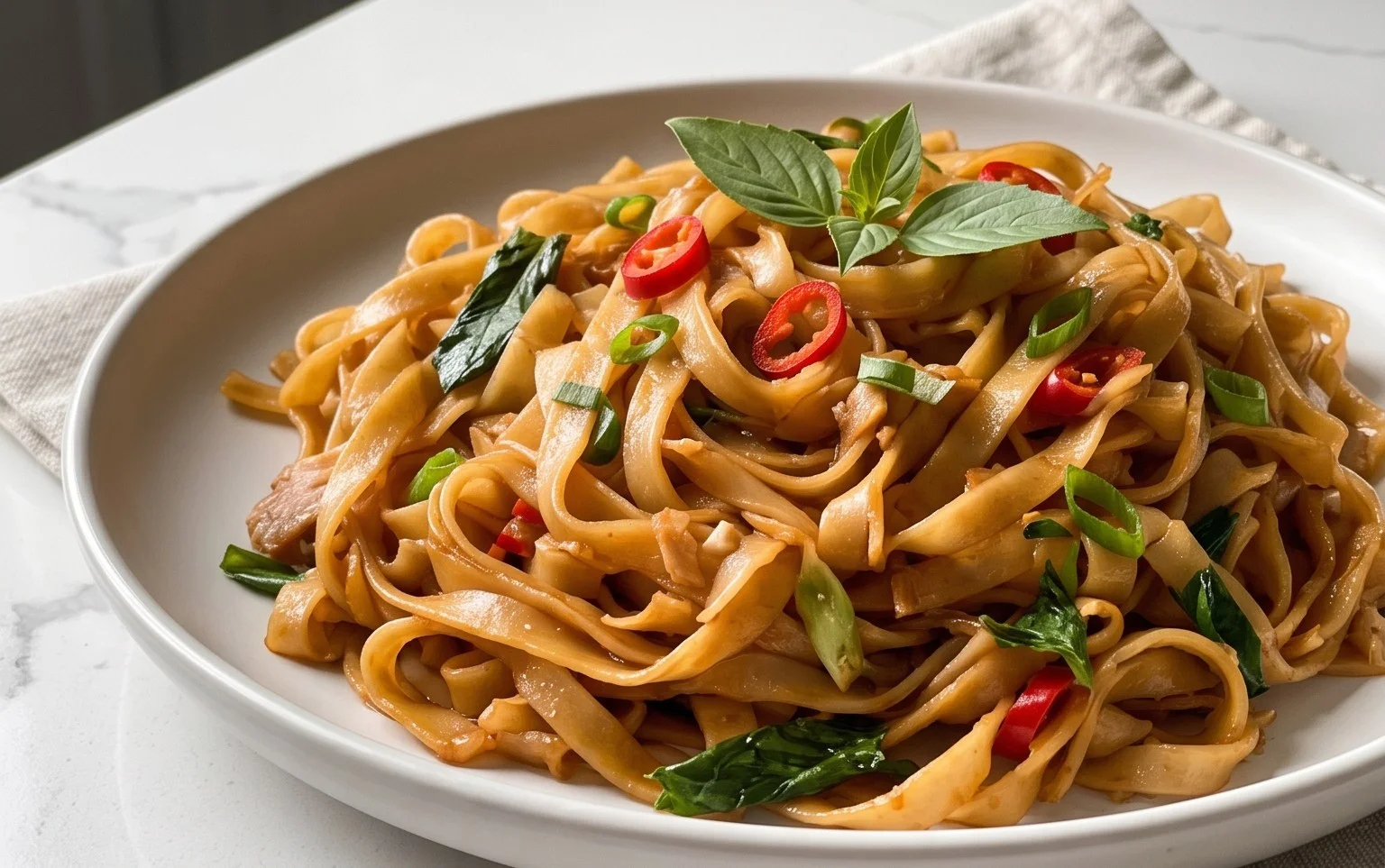
Drunken noodles, or Pad Kee Mao, are more than just a meal; they’re an experience. This iconic Thai stir-fry boasts a vibrant personality, a delightful dance of sweet, savory, and spicy that ignites the taste buds. It’s no wonder why so many of us fall head over heels for Drunken noodles. What sets this dish apart is its sheer audacity – the bold flavors, the tender wide rice noodles that soak up every drop of sauce, and the satisfying chew. Often misunderstood as containing actual non-alcoholic alternative, the name “Drunken noodles” actually refers to the legend that it was invented to help sober up those who had enjoyed a night of revelry. The fragrant blend of garlic, chilies, basil, and a touch of soy and oyster sauce creates a symphony of flavors that is both comforting and exhilarating. Get ready to discover why this beloved dish is a staple in Thai cuisine and a guaranteed crowd-pleaser in your own kitchen.
Spicy, Savory, and Utterly Addictive: Your Guide to Authentic Drunken Noodles (Pad Kee Mao)
There are some dishes that just sing to your soul, and for me, Drunken Noodles, or Pad Kee Mao as it’s known in Thailand, is definitely one of them. Its name, literally translating to “drunkard’s noodles,” hints at its bold, robust flavors – perfect for a hearty meal that can stand up to a bit of spice and a lot of deliciousness. This isn’t a subtle dish; it’s a vibrant explosion of savory, spicy, and slightly sweet notes, all clingin extractg to perfectly chewy rice noodles. Forget the takeout version; making authentic Pad Kee Mao at home is surprisingly straightforward and incredibly rewarding. Let’s dive in!
Ingredients:
Preparing Your Noodles and Chicken
The foundation of any great noodle dish is the noodles themselves. For Drunken Noodles, we want those wonderfully chewy, wide rice noodles. If you’re using dried ones, the key is to follow the package instructions precisely. Usually, this involves soaking them in hot water for a specific amount of time until they are pliable but still have a slight bite to them – al dente, if you will. Overcooked noodles will turn mushy and sad, and nobody wants that. Once they’re ready, drain them thoroughly and toss them with a tiny bit of oil to prevent them from sticking together while you prepare the rest of your ingredients. For the chicken, I prefer thighs for their extra flavor and tenderness, but breast works beautifully too. Slice it thinly against the grain so it cooks quickly and evenly. A quick marinade with just 1 teaspoon of soy sauce adds a subtle layer of flavor and helps tenderize the meat.
Crafting the Flavorful Sauce
The magic of Pad Kee Mao truly lies in its sauce. This is where all the savory, spicy, and slightly sweet notes come together. In a small bowl, whisk together the soy sauce, dark soy sauce, oyster sauce, fish sauce, and brown sugar. The dark soy sauce is crucial for achieving that signature deep, caramelized color, while the fish sauce brings that quintessential Southeast Asian umami punch. The brown sugar is not just for sweetness; it plays a vital role in balancing the intense saltiness of the soy and fish sauces and the fiery kick of the chilies. Taste it at this stage – it should be intensely flavorful.
The Stir-Fry Symphony
Now for the exciting part – the stir-fry! This dish comes together very quickly, so it’s essential to have all your ingredients prepped and ready to go before you even turn on the heat.
Serve your Drunken Noodles immediately. The steam rising from the plate, carrying the fragrant scent of basil and chilies, is an invitation to indulge. This dish is a perfect balance of textures and flavors, with the chewy noodles, tender chicken, crisp vegetables, and the savory, spicy sauce that coats it all. It’s a taste of Thailand that’s both comforting and exciting. Enjoy every delicious, slightly tipsy bite!
Conclusion:
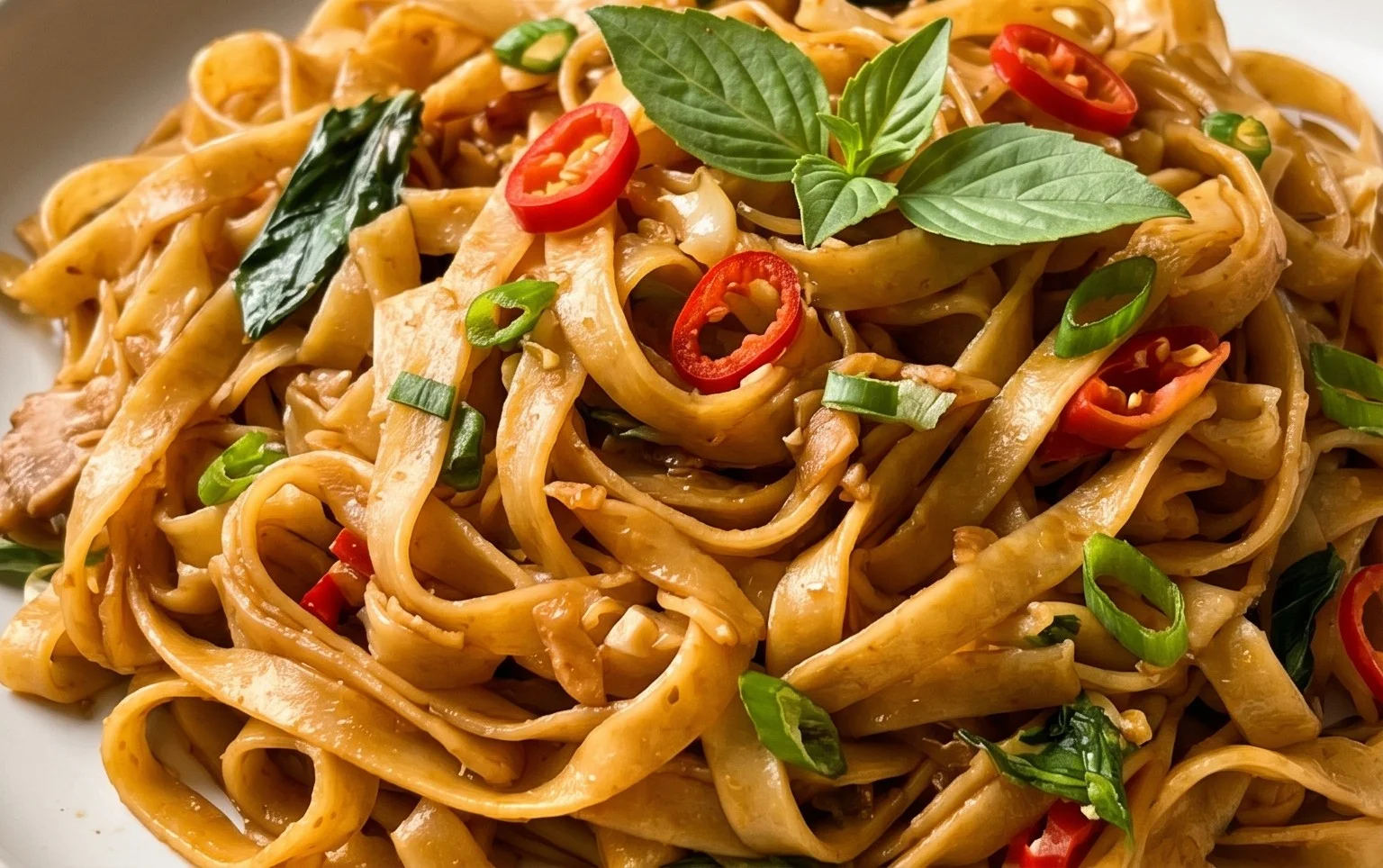
I hope you’re as excited as I am to dive into the world of drunken noodles! This recipe truly captures the vibrant and bold flavors of Thai cuisine, offering a delightful balance of savory, spicy, and slightly sweet notes. The beauty of these Pad Kee Mao, or drunken noodles, lies in their versatility and the satisfyingly chewy texture of the wide rice noodles. It’s a dish that’s surprisingly quick to whip up, making it perfect for a weeknight adventure or a flavorful weekend meal. I encourage you to give this recipe a try; I promise you won’t be disappointed by the explosion of taste and aroma that fills your kitchen as you cook.
For serving, these noodles are fantastic on their own, but I often pair them with a simple side salad or some fresh cucumber slices to add a refreshing contrast. If you’re feeling adventurous, consider adding extra vegetables like broccoli florets or snap peas for added crunch and nutrition. Don’t be afraid to adjust the spice level to your preference – more chili for a fiery kick, or less for a milder experience.
Frequently Asked Questions:
Can I make this recipe vegetarian or vegan?
Absolutely! To make your drunken noodles vegetarian or vegan, simply omit the meat and use firm or extra-firm tofu. Ensure your oyster sauce is replaced with a vegetarian stir-fry sauce or a mushroom-based sauce. The rest of the ingredients, including the rice noodles and vegetables, are typically vegan-friendly.
What kind of noodles are best for drunken noodles?
Traditionally, wide, flat rice noodles (sometimes called ‘sen yai’) are used for Pad Kee Mao. These noodles have a wonderfully chewy texture that holds up well to the stir-frying process and soaks up the delicious sauce beautifully. If you can’t find them, medium-width flat rice noodles are a good substitute.
My drunken noodles are too dry. What went wrong?
This can happen if the noodles have been overcooked before stir-frying or if you haven’t added enough sauce. Make sure to stir-fry the noodles quickly over high heat, just until they are pliable but still have a slight bite. When adding the sauce, ensure it coats the noodles evenly. You can also add a tablespoon or two of water or vegetable broth to the pan if the noodles seem too dry during the cooking process.
Drunken Noodles (Pad Kee Mao)
Spicy and savory Thai stir-fried noodles with tender chicken, crisp vegetables, and aromatic holy basil, all brought together in a rich sauce.
Ingredients
-
250 grams medium wide rice noodles (dried)
-
250 grams chicken thighs or chicken breast
-
1 tablespoon minced garlic
-
1/2 onion (sliced)
-
2-3 Thai red chili peppers
-
4-5 Baby bok choy
-
1 cup Holy basil
-
1 Green Onion (White and green parts separate)
-
3 tablespoons soy sauce
-
1.5 teaspoon dark soy sauce
-
2 teaspoons oyster sauce
-
1 tablespoon + 1 teaspoon fish sauce
-
2 teaspoons brown sugar
-
3 tablespoons vegetable or canola oil (divided)
Instructions
-
Step 1
Cook rice noodles according to package directions. Drain and set aside. If using dried noodles, soak them in hot water for about 10-15 minutes until pliable, then drain. -
Step 2
While noodles cook, prepare the sauce by whisking together 3 tablespoons soy sauce, 1.5 teaspoons dark soy sauce, 2 teaspoons oyster sauce, 1 tablespoon + 1 teaspoon fish sauce, and 2 teaspoons brown sugar in a small bowl. -
Step 3
Heat 1 tablespoon of oil in a wok or large skillet over medium-high heat. Add minced garlic, sliced onion, and Thai red chili peppers. Stir-fry until fragrant, about 1-2 minutes. -
Step 4
Add chicken and stir-fry until almost cooked through. Add the white parts of the green onion and stir-fry for another minute. -
Step 5
Add the baby bok choy and stir-fry until it begins to wilt, about 1-2 minutes. Pour in the prepared sauce and bring to a simmer. -
Step 6
Add the cooked rice noodles and holy basil to the wok. Toss everything together until the noodles are well coated with the sauce and the holy basil is wilted. Stir-fry for another 1-2 minutes. -
Step 7
Stir in the remaining 2 tablespoons of oil. Garnish with the green parts of the green onion before serving.
Important Information
Nutrition Facts (Per Serving)
It is important to consider this information as approximate and not to use it as definitive health advice.
Allergy Information
Please check ingredients for potential allergens and consult a health professional if in doubt.