Japchae Korean Glass Noodle Stir Fry Recipe
Japchae, a beloved Korean glass noodle stir fry, is a dish that truly captivates the senses. Its vibrant colors, delightful textures, and subtly sweet and savory flavor profile make it an absolute crowd-pleaser. Have you ever found yourself mesmerized by the glistening, translucent strands of sweet potato noodles, perfectly tossed with a medley of fresh vegetables and tender proteins? That’s the magic of Japchae. What I adore about this classic Korean dish is its incredible versatility; it’s equally at home as a festive holiday centerpiece or a comforting weeknight meal. The sheer beauty of a well-made Japchae, with its harmonious blend of textures from crisp vegetables and chewy noodles, is a testament to its enduring popularity. It’s a dish that not only nourishes the body but also brings joy to the table, making it a must-try for any culinary adventurer. Prepare to fall in love with this delightful Japchae!
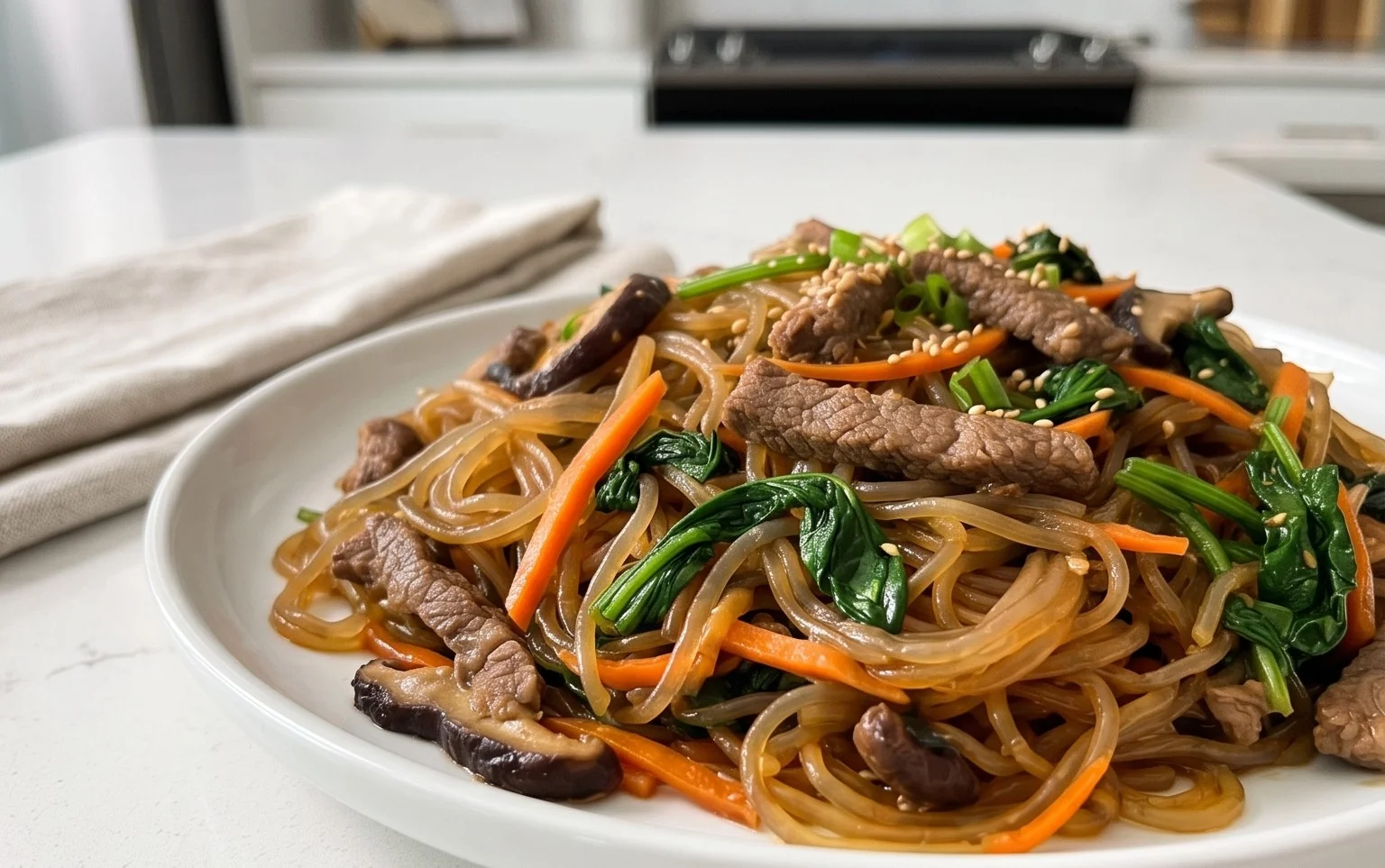
Japchae (Korean Glass Noodle Stir Fry)
Japchae is a vibrant and incredibly satisfying Korean noodle dish, a true celebration of textures and flavors. It features slippery, chewy sweet potato glass noodles stir-fried with an array of colorful vegetables and tender strips of meat. While it might seem like a lot of ingredients at first glance, the process is quite manageable and the result is a crowd-pleasing dish perfect for any occasion, from a weeknight dinner to a festive gathering. The beauty of Japchae lies in its versatility; you can adjust the vegetables and protein to your liking. Let’s get started on creating this delightful Korean classic in your own kitchen.
Ingredients:
Preparing the Components
Before we dive into the stir-frying, it’s crucial to prep all our ingredients. This is a dish where everything comes together quickly, so having everything ready to go will make the cooking process smooth and enjoyable.
1. Cook the Glass Noodles: Bring a large pot of water to a rolling boil. Add the sweet potato glass noodles and cook according to package directions, usually about 6-8 minutes, until they are translucent and tender but still have a slight chew. Be careful not to overcook them, as they can become mushy. Once cooked, drain them thoroughly in a colander and rinse them under cold water to stop the cooking process and prevent them from sticking together. Transfer the noodles to a large mixing bowl.
2. Marinate the Beef: While the noodles are cooking, prepare your beef. In a separate bowl, combine the beef strips with 1 tablespoon of soy sauce, 1 teaspoon of brown sugar, and a pinch of black pepper. Mix well and let it marinate for at least 10-15 minutes. This step is essential for tenderizing the beef and infusing it with flavor. If you’re using pre-cut beef strips, you can skip the cutting part.
3. Prepare the Soy Sauce Mixture: In a small bowl, whisk together the remaining 6 tablespoons of soy sauce, honey, and the remaining 1 tablespoon of brown sugar. This will be our main flavoring sauce for the Japchae.
4. Cook the Egg Crepes: This adds a beautiful visual element and a delicate texture to the dish. Heat about 1 teaspoon of oil in a non-stick skillet over medium-low heat. Pour in half of the beaten eggs and swirl the pan to create a thin crepe. Cook for about 1-2 minutes per side, until lightly golden. Slide it onto a plate and repeat with the remaining egg. Once cooled, stack the egg crepes and thinly slice them into ribbons. Set aside.
Stir-Frying and Assembly
Now that all our components are ready, we can begin extract the exciting part of bringin extractg everything together.
1. Sauté the Vegetables and Beef: Heat about 1 tablespoon of oil in a large wok or a large skillet over medium-high heat. Add the marinated beef and stir-fry until it’s browned and cooked through, about 3-5 minutes. Remove the beef from the wok and set it aside. Add another teaspoon of oil to the wok if needed. Then, add the sliced yellow onion and stir-fry until softened and translucent, about 2-3 minutes. Add the julienned carrot and sliced mushrooms to the wok. Continue to stir-fry for another 3-4 minutes, until the vegetables are tender-crisp. You want them to retain a bit of their bite.
2. Wilt the Spinach and Add Green Onions: Add the packed baby spinach to the wok. Stir-fry for just about 30 seconds to 1 minute, until the spinach has wilted. Then, add the cut green onions and stir-fry for another 30 seconds. The goal here is to lightly cook them without making them mushy.
3. Combine Everything and Sauce: Return the cooked beef to the wok. Add the cooked and drained glass noodles to the wok. Pour the prepared soy sauce mixture over everything. Now, using two spatulas or tongs, gently toss and stir everything together, ensuring that the noodles and all the ingredients are evenly coated with the sauce. Continue to cook for about 2-3 minutes, stirring constantly, until the noodles have absorbed the sauce and everything is heated through. This is where the magic happens, as the noodles will become beautifully glazed.
4. Season and Garnish: Taste the Japchae and add salt and black pepper as needed. Remember that the soy sauce is already salty, so adjust accordingly. Finally, drizzle in the toasted sesame oil and toss one last time. This final drizzle of sesame oil adds an incredible aroma and depth of flavor. Transfer the Japchae to a large serving platter. Garnish with the reserved egg ribbons and toasted sesame seeds (if using).
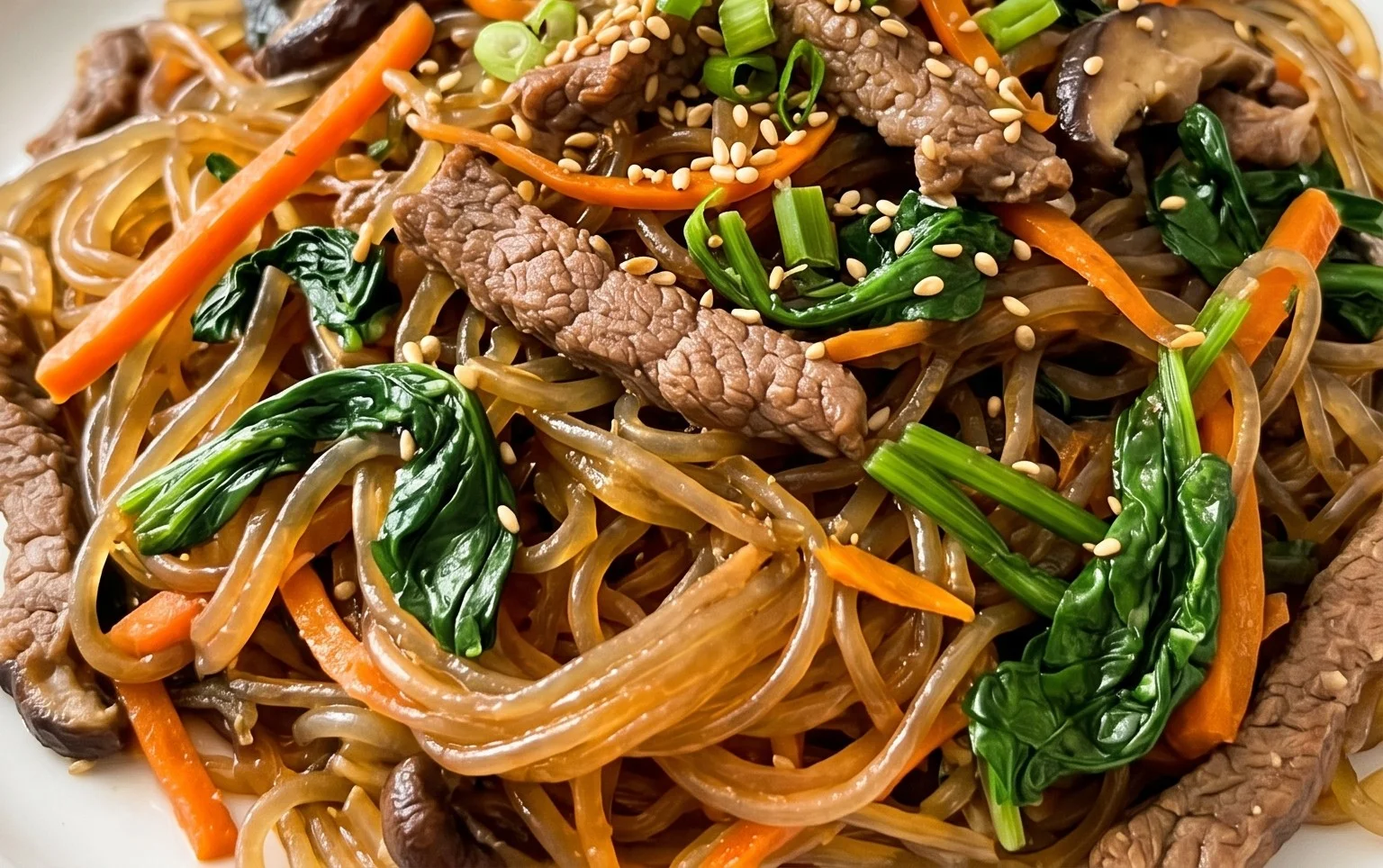
Enjoy your homemade Japchae! It’s a dish that is as beautiful to look at as it is delicious to eat. The combination of the chewy noodles, savory beef, crisp-tender vegetables, and the hint of sweetness from the sauce is truly something special. It’s a wonderful way to experience a popular Korean favorite.
Conclusion:
There you have it – a delightful journey into making authentic Japchae right in your own kitchen! This Korean glass noodle stir fry is truly a gem. Its beauty lies in the harmonious blend of textures from the chewy glass noodles and crisp vegetables, all brought together by a savory-sweet soy sauce-sesame oil dressing. It’s not just a dish; it’s a celebration of fresh ingredients and nuanced flavors, making it a crowd-pleaser for any occasion. Whether you’re hosting a dinner party or simply craving a comforting and flavorful meal, Japchae is sure to impress. Don’t hesitate to experiment with the vegetables to make it your own – bell peppers of various colors, snap peas, or even some sliced mushrooms can add wonderful new dimensions.
I highly encourage you to give this Japchae recipe a try. It’s more accessible than you might think, and the satisfaction of creating such a vibrant and delicious dish is incredibly rewarding. Serve it as a main course, or as a spectacular side dish alongside Korean BBQ or other Korean favorites. The possibilities are endless, and the enjoyment is guaranteed!
Frequently Asked Questions about Japchae:
What kind of noodles are best for Japchae?
The signature noodle for Japchae is dangmyeon, which are Korean sweet potato starch noodles. Their unique chewy texture and ability to absorb flavor are what make this dish so special. If you can’t find them, other clear glass noodles might work, but the texture won’t be quite the same.
Can I make Japchae ahead of time?
Japchae is best enjoyed fresh, as the noodles can become too soft and the vegetables might lose their crispness if stored for too long. However, you can prep most of the ingredients (chop vegetables, cook and season noodles separately) a day in advance. Then, combine and stir-fry everything just before serving for optimal results.
Are there any ways to make Japchae spicier?
Absolutely! For a touch of heat, you can add a pinch of gochugaru (Korean chili flakes) to the sauce. You could also thinly slice some fresh red chilies or add a drizzle of chili oil just before serving for an extra kick.
Japchae (Korean Glass Noodle Stir Fry)
A classic Korean dish featuring chewy glass noodles stir-fried with vegetables and seasoned beef in a savory-sweet sauce.
Ingredients
-
12 ounces sweet potato glass noodles
-
16 ounces beef (cut into strips)
-
2 large eggs (beaten)
-
1 large carrot (peeled and julienned)
-
1 medium yellow onion (thinly sliced)
-
3 mushrooms (thinly sliced)
-
2 cups baby spinach (packed)
-
2 stalks green onion (cut into 1 inch pieces)
-
oil (for cooking)
-
salt and black pepper (as needed)
-
7 tablespoons soy sauce (light sodium)
-
3 tablespoons honey
-
2 tablespoons brown sugar
-
2 tablespoons toasted sesame oil
Instructions
-
Step 1
Cook the glass noodles according to package directions. Drain, rinse with cold water, and toss with 1 tablespoon of toasted sesame oil to prevent sticking. Set aside. -
Step 2
In a bowl, combine the beef with 2 tablespoons of soy sauce, 1 tablespoon of honey, 1 tablespoon of brown sugar, and a pinch of salt and pepper. Marinate for at least 15 minutes. -
Step 3
Heat 1 tablespoon of oil in a large skillet or wok over medium-high heat. Cook the marinated beef until browned and cooked through. Remove beef from the skillet and set aside. -
Step 4
Add a little more oil to the skillet if needed. Stir-fry the julienned carrots and sliced onions until slightly softened, about 3-5 minutes. Add the sliced mushrooms and cook for another 2-3 minutes. -
Step 5
Push the vegetables to one side of the skillet. Pour the beaten eggs into the empty space and scramble them. Once cooked, chop the scrambled eggs into bite-sized pieces and mix them with the vegetables. -
Step 6
Add the cooked noodles, beef, baby spinach, and green onions to the skillet. In a small bowl, whisk together the remaining 5 tablespoons of soy sauce, 2 tablespoons of honey, 1 tablespoon of brown sugar, and 1 tablespoon of toasted sesame oil. -
Step 7
Pour the sauce over the noodle mixture. Toss everything together gently until well combined and heated through, ensuring the spinach wilts. Season with salt and pepper to taste. -
Step 8
Serve immediately, garnished with toasted sesame seeds if desired.
Important Information
Nutrition Facts (Per Serving)
It is important to consider this information as approximate and not to use it as definitive health advice.
Allergy Information
Please check ingredients for potential allergens and consult a health professional if in doubt.