Easy French Macaron Recipe – Perfect French Cookies
French Macaron Recipe: The quest for the perfect French macaron can feel like a delicious enigma, a delicate dance of ingredients and technique. But oh, the reward! These exquisite little sandwich cookies, with their crisp shell, chewy interior, and vibrant fillings, have captured hearts (and taste buds!) worldwide. What is it about the humble French macaron that makes it so irresistible? It’s the sheer elegance, the satisfying textural contrast, and the boundless creativity in flavor combinations. From classic chocolate ganache to ethereal rosewater buttercream, the possibilities are as dazzling as the colors you can achieve. Mastering the French macaron recipe is an accomplishment that brings a touch of Parisian patisserie right into your own kitchen, offering a sweet escape that feels both sophisticated and utterly delightful. Let’s embark on this delightful journey together and create some magic!
French Macaron Recipe
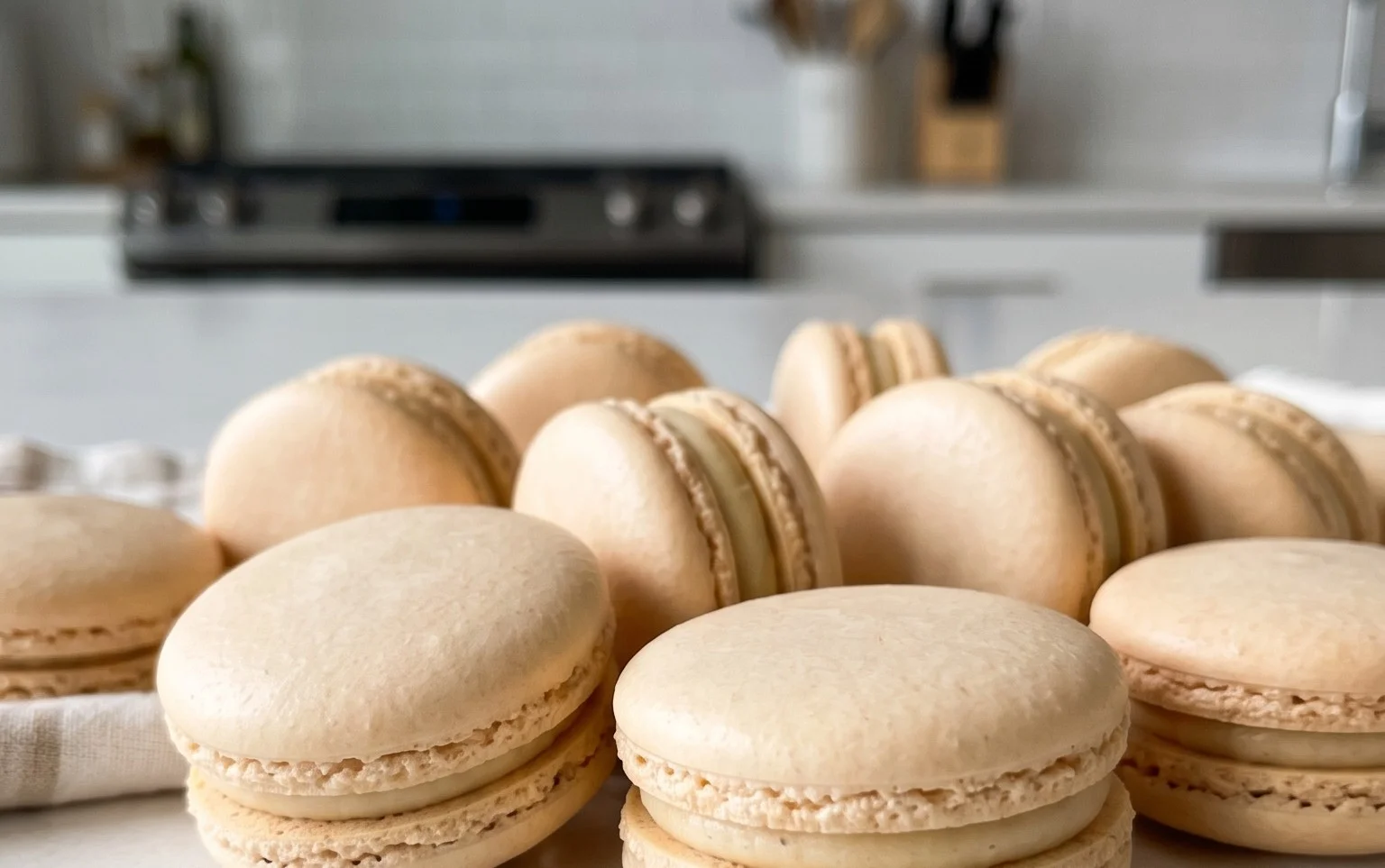
Ah, the French macaron. Those delicate, airy, pastel-colored meringue cookies with a delightfully chewy center, sandwiched together with a luscious filling. They seem so sophisticated, so intimidating, don’t they? But I’m here to tell you that with a little patience, precision, and the right guidance, you absolutely can make beautiful, delicious macarons at home. Forget the expensive bakery price tag; we’re about to embark on a sweet adventure!
This recipe is designed to be as clear and foolproof as possible. We’ll break down each step, offering tips and explanations along the way. So grab your apron, take a deep breath, and let’s get baking!
Ingredients:
The Macaronage Method: Bringin extractg it All Together
This is where the magic happens, and also where a bit of finesse is required. The term “macaronage” refers to the crucial process of folding the dry ingredients into the meringue. It’s the key to achieving that perfect smooth, flowing batter that will create those characteristic “feet” on your macarons.
1. Preparing the Dry Ingredients: First things first, we need to combine our dry ingredients. In a medium bowl, whisk together the sifted almond flour, powdered sugar, and salt. It’s essential that your almond flour is super-fine. If you can only find regular almond flour, pulse it in a food processor for a few seconds (being careful not to over-process and turn it into almond butter) and then sift it. Sifting is non-negotiable for macarons; it removes any lumps and ensures a smooth shell. I like to sift mine twice for extra insurance. After whisking, set this bowl aside.
2. Making the Meringue: Now, let’s tackle the meringue. In a clean, dry bowl of a stand mixer (or a large bowl if using a hand mixer), add your room temperature egg whites. It’s crucial that there is absolutely no trace of yolk or grease in the bowl or on the whisk attachment, as this will prevent the egg whites from whipping properly. Start whipping the egg whites on medium speed until they become foamy. Gradually add the granulated sugar, a tablespoon at a time, while the mixer is still running. Continue to mix on medium-high speed until stiff, glossy peaks form. When you lift the whisk, the meringue should stand up straight and hold its shape. This usually takes about 8-10 minutes.
3. Adding Color and Flavor: Once you have stiff peaks, it’s time to add the color and flavor. Add your liquid-gel food coloring and vanilla extract to the meringue. Gel coloring is preferred as it’s concentrated and won’t add too much liquid to the batter, which can be detrimental to macaron success. Gently fold them in with a spatula until the color is uniform. Be careful not to overmix at this stage, but ensure the color is well distributed.
4. The Macaronage Technique: This is arguably the most important step. Gradually add the dry ingredients to the meringue in two or three additions. Using a flexible spatula, gently fold the dry ingredients into the meringue. This is where you need to develop a feel for the batter. You want to scrape down the sides and bottom of the bowl, then fold the batter over itself, as if you’re “cutting” through the mixture and folding it back. Continue this folding and scraping motion until the batter reaches a “lava-like” consistency. It should flow slowly off the spatula in a thick ribbon, and when you draw a “figure 8” with the batter, it should hold its shape for a few seconds before melting back into the rest of the batter. Overmixing will result in flat, spread-out macarons with no feet, while undermixing will give you bumpy shells with no feet. It takes practice, so don’t be discouraged if your first attempt isn’t perfect!
Baking the Perfect Macarons
Once your batter is just right, it’s time to get them ready for the oven.
5. Piping and Resting: Prepare baking sheets by lining them with parchment paper or silicone baking mats. You can draw circles on the parchment paper beforehand as a guide, or use a macaron template. Transfer the macaron batter to a piping bag fitted with a round tip (about 1 cm). Hold the piping bag perpendicular to the baking sheet and pipe small rounds of batter, about 1 to 1.5 inches in diameter, leaving about an inch of space between each macaron. Once piped, firmly tap the baking sheets on your counter several times. This helps to release any trapped air bubbles and also helps the macarons to spread out evenly. Now, this is a crucial waiting game: let the piped macarons sit at room temperature for at least 30 minutes, or until a skin forms on the surface. You should be able to gently touch a macaron without any batter sticking to your finger. This skin is what allows the macarons to puff up and develop their feet in the oven.
Baking and Assembling:
Preheat your oven to 300°F (150°C). Bake the macarons for 12-15 minutes, or until the feet have formed and the shells are firm to the touch. They should lift easily off the parchment paper. If they stick, bake for another minute or two. Let the macarons cool completely on the baking sheets before attempting to remove them. Once cooled, match up similarly sized shells and pipe your chosen filling (vanilla buttercream is a classic!) onto one shell, then gently place the other shell on top.
Notes:
Enjoy your beautiful homemade French macarons! They are best enjoyed after resting in an airtight container in the refrigerator for at least 24 hours, allowing the flavors to meld and the texture to become perfectly chewy. Happy baking!
Conclusion:
Congratulations, you’ve learned the secrets to creating perfect French macarons! This recipe, with its focus on precise technique and quality ingredients, offers a rewarding baking experience and results in those iconic, delicate cookies with their signature crisp shell and chewy interior. The satisfaction of biting into a homemade macaron, perfectly sandwiched with luscious filling, is truly unparalleled. Don’t be intimidated by their reputation; with patience and careful attention to each step, you’ll be mastering these elegant treats in no time. They are wonderful served simply with a cup of coffee or tea, or as a stunning addition to any dessert platter or special occasion.
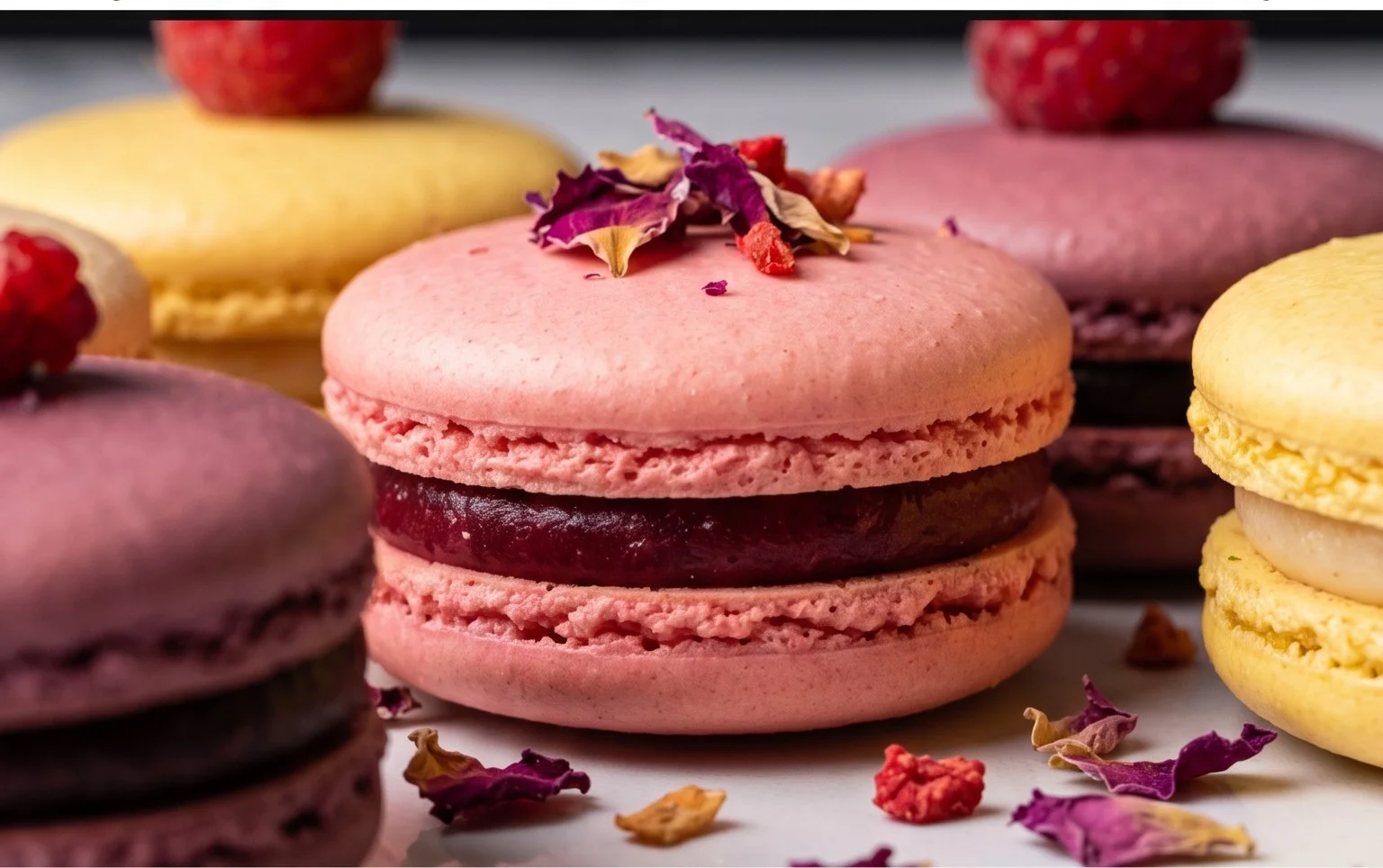
Feel free to experiment with the filling! Classic choices like chocolate ganache, raspberry jam, or salted caramel are always a hit, but consider lemon curd, coffee buttercream, or even a lavender-infused cream for something unique. This versatile French macaron recipe is your gateway to endless flavor possibilities.
Frequently Asked Questions:
Why are my French macarons cracking?
Cracking often occurs due to oven temperature being too high, or the meringue not being stable enough. Ensure your oven is accurately calibrated and your meringue is stiff and glossy before folding in the dry ingredients. Letting the macarons rest and form a skin before baking is also crucial for preventing cracks.
My macarons are hollow. What went wrong?
Hollow macarons can be caused by several factors. Over-mixing the batter after adding the dry ingredients is a common culprit, as it deflates the meringue. Under-baking can also lead to hollowness. Keep a close eye on them during the final minutes of baking.
Can I make macaron shells ahead of time?
Yes! Once baked and completely cooled, macaron shells can be stored in an airtight container at room temperature for a day or two, or in the refrigerator for up to a week. They actually benefit from resting in the fridge overnight after being filled, as this allows the flavors to meld and the textures to soften beautifully.
French Macaron Recipe
A classic recipe for making delicate and delicious French macarons with a smooth shell and chewy interior.
Ingredients
-
150 grams sifted super-fine almond flour
-
180 grams powdered sugar
-
1/4 teaspoon salt
-
120 grams large egg whites (at room temperature)
-
60 grams granulated sugar
-
4 drops liquid-gel food coloring
-
1 teaspoon pure vanilla extract
Instructions
-
Step 1
Sift together almond flour, powdered sugar, and salt. Whisk until thoroughly combined and set aside. -
Step 2
In a clean, dry bowl, beat egg whites until foamy. Gradually add granulated sugar while continuing to beat until stiff, glossy peaks form. -
Step 3
Add food coloring and vanilla extract to the meringue and gently fold until just combined and a uniform color is achieved. -
Step 4
Gently fold the dry ingredients into the meringue in three additions until the batter reaches a lava-like consistency. Do not overmix. -
Step 5
Pipe small rounds of batter onto baking sheets lined with parchment paper. Tap the baking sheets firmly on the counter to release air bubbles. -
Step 6
Bake at 300°F (150°C) for 12-15 minutes, or until the macarons are set and have developed ‘feet’. -
Step 7
Let the macarons cool completely on the baking sheets before removing them. Fill with Vanilla Buttercream Frosting or your choice of filling.
Important Information
Nutrition Facts (Per Serving)
It is important to consider this information as approximate and not to use it as definitive health advice.
Allergy Information
Please check ingredients for potential allergens and consult a health professional if in doubt.